Introduction
Premium denim is about more than a high price. In 2026, the distinction between standard jeans and high-end denim comes down to specific details: fabric weight in oz, weave quality, selvedge or non-selvedge construction, finishing, and how the fabric ages naturally.
This guide explains the technical details that help you recognize quality denim.
1. Denim weight in oz: understanding premium denim
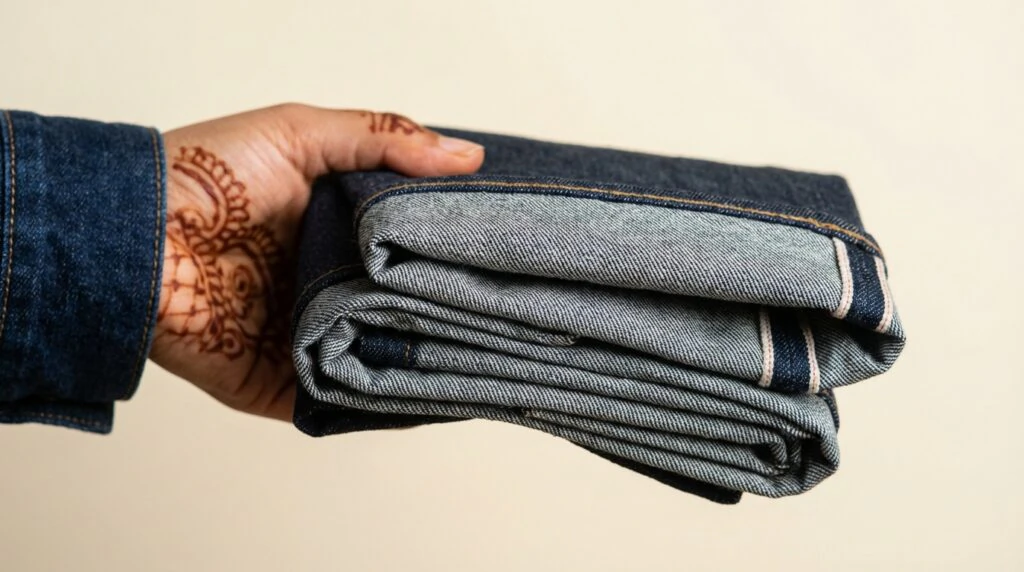
Denim weight is measured in ounces (oz) per square yard. It is one of the first indicators of quality.
- 8–10 oz: lightweight denim (summer)
- 11–13 oz: standard weight
- 14–16 oz: robust premium denim
- 17 oz+: heavyweight premium denim
Premium denim generally weighs between 13 oz and 16 oz.
Heavier denim offers more structure, greater durability and a distinctive character as it ages.
2. The weave: selvedge and non-selvedge
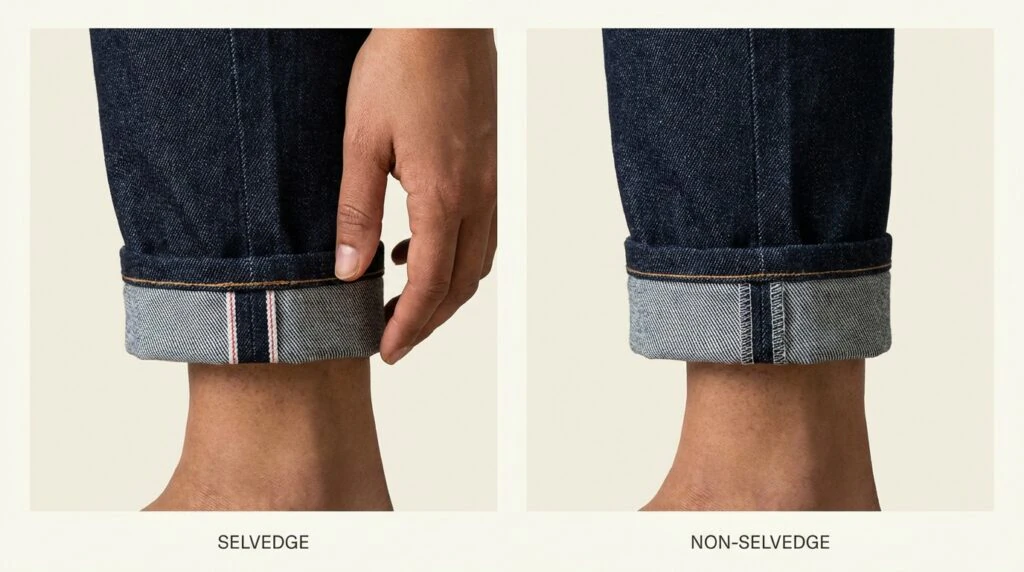
The distinction between selvedge and non-selvedge matters.
Selvedge denim is woven on traditional shuttle looms.
The result:
- A clean, self-finished edge
- A denser weave
- Greater strength
- An authentic look
Non-selvedge denim is produced industrially in wider widths, making production faster but less exclusive.
Premium denim often uses selvedge construction, but cotton quality and weave density remain decisive.
3. Cotton and yarn quality
Denim quality depends on the cotton used:
- Long-staple cotton
- Ring-spun yarn
- Irregular yarn for natural texture
Premium denim has a subtle, uneven texture that reflects the character of its weave.
4. Finishing: details that make a difference

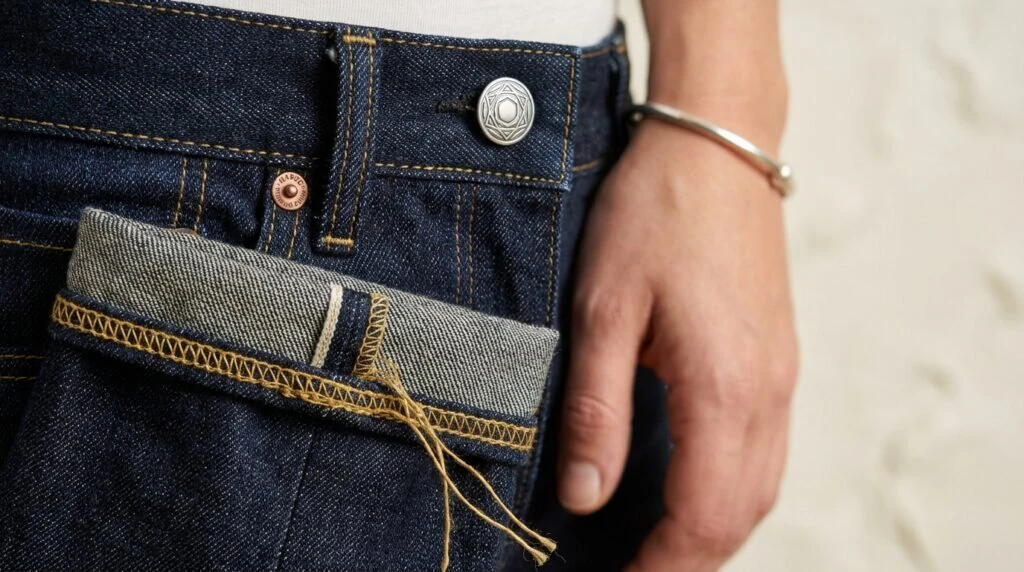
Finishing details on premium jeans include:
- Chain stitching
- Engraved rivets
- Custom buttons
- Reinforced pockets
- Neat hems
- Even topstitching
The details inside often reveal more than the exterior.
5. Aging: the test of time
Premium denim evolves.
While lower-quality jeans lose their color, high-end denim develops:
- Natural contrasts
- Creases shaped by the wearer
- A distinctive patina
- Wear patterns that reflect natural movement
This is known as a natural “fade”.
Good denim reveals its character with age.
6. How can you assess denim before buying?
A quick checklist:
✓ Feel the thickness
✓ Check the density
✓ Examine the stitching
✓ Look at the inside edge (is it selvedge?)
✓ Fold the fabric (does it recover its shape?)
Conclusion
Recognizing premium denim takes a close look at the technical details: weight in oz, weave, selvedge or non-selvedge construction, cotton quality, finishing, and how the fabric ages.
True premium denim doesn’t need to impress at first glance.
It proves its worth over time.